Loading...
Serving Daytona Beach, FL and surrounding areas. (386) 278-1623
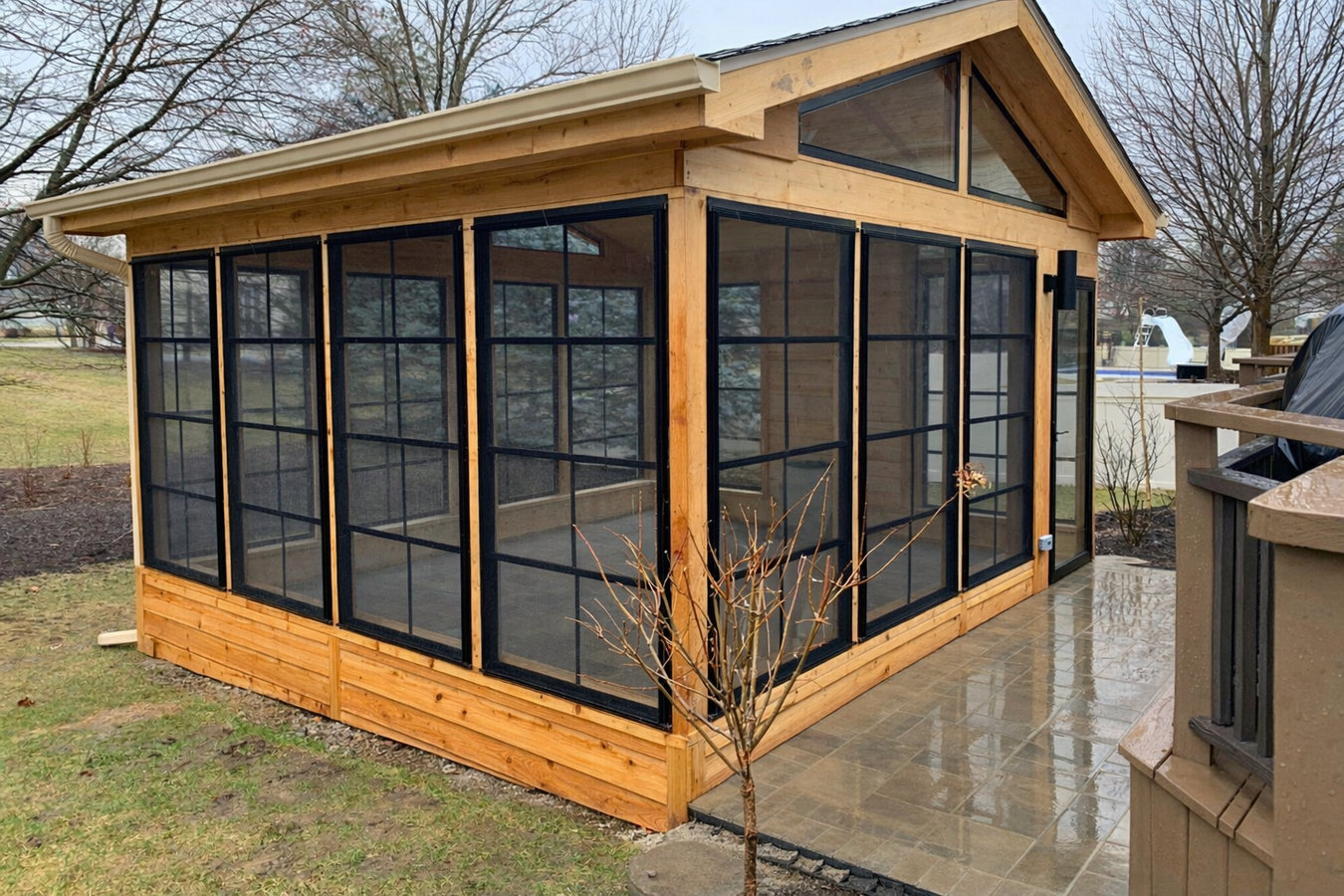
Daytona Beach Lanai Sunrooms & Patios builds patio enclosures, screened lanais, and four-season sunrooms throughout Palm Coast. We pull City of Palm Coast permits, work on canal-side lots and CBS homes from the ITT development era, and respond within one business day.
Nearly every Palm Coast ranch home has a rear concrete patio slab and a screened lanai frame that has weathered years of salt air and storm cycles. Our patio enclosure work re-screens, re-glazes, or fully re-frames those spaces so homeowners get another decade or more of use out of the existing footprint.
Palm Coast's wooded residential sections and canal corridors create ideal mosquito habitat, especially during the humid months from May through October. A properly built screened room lets families use their outdoor space in the evenings without surrendering the yard to bugs.
Palm Coast summers are genuinely hot and humid, and afternoon thunderstorms are a near-daily event from May through September. A fully insulated, climate-controlled four-season sunroom gives homeowners a comfortable room they can use every day of the year, not just during the mild months.
The single-story ranch homes that make up most of Palm Coast's housing stock were built with compact floor plans typical of the 1970s and 1980s ITT development. Adding a permitted sunroom to the rear of the home is one of the few practical ways to gain square footage without a full interior gut and rebuild.
For Palm Coast homeowners who want shade and rain coverage on the back patio without a full enclosure, a solid patio cover extends outdoor usability through the rainy season while keeping costs lower than a full screen room build. Covers installed here must be sized and anchored for Flagler County's coastal wind requirements.
Many of Palm Coast's ITT-era homes have existing screen rooms or lanai enclosures that are 30 or 40 years old - the frames are often aluminum that has oxidized, and the screens have been repaired so many times that a full remodel makes more sense than another patch job. We assess whether repair or replacement is the better value on every remodel estimate.
Palm Coast was built almost entirely by ITT Community Development Corporation between the 1970s and 1990s, which means the city's housing stock is largely uniform in age and construction type: single-story concrete block homes with stucco exteriors, attached garages, and rear screened lanais on modest lots. At 30 to 50 years old, those original lanai frames and screen enclosures are routinely at or past the end of their service life. Aluminum oxidizes, screen mesh tears and sags, and caulk around the perimeter fails - often several of these problems together. A contractor who just re-screens without evaluating the frame condition is setting the homeowner up for the same work again in a few years. Palm Coast's canal-side lots add another layer of complexity: properties with rear yards along the freshwater canal network see elevated ground moisture that accelerates metal corrosion and puts more stress on concrete slab joints over time.
Flagler County's position on Florida's northeast Atlantic coast puts it in a higher wind speed zone than Central Florida, and the City of Palm Coast Building Division enforces Florida Building Code requirements that reflect those coastal wind loads. Hurricane Matthew in 2016 and Hurricane Irma in 2017 both caused significant damage in Palm Coast, and the lessons from those storms are built into the current code requirements. A permitted, inspected enclosure or sunroom built to those standards gives homeowners real storm protection - not just a structure that looks solid until the first named storm tests it.
Our crew works throughout Palm Coast regularly, and we pull permits through the City of Palm Coast Building Division on every project here. The city has its own permit office - separate from Flagler County - and we are familiar with the review process, the inspection schedule, and the specific code interpretations the city applies to screen rooms and sunroom additions in coastal wind zones. That familiarity keeps projects on schedule rather than stalling out in permit review.
Palm Coast is organized around Palm Coast Parkway, which runs through the commercial heart of the city near Town Center, and branches off into the alphabetically organized residential sections that are the city's defining layout feature - locals know the "C" section, the "B" section, and the other lettered neighborhoods by name. Most of the residential streets in those older sections run through wooded lots where mature trees provide shade but also drop debris onto roofs and gutters during storms. Canal-front properties are scattered throughout these sections, and the city's canal maintenance program is something homeowners near the water deal with regularly. The newer communities like Grand Haven on the western edge of the city have a different character, with larger lots and newer construction, but the enclosure needs are similar. Washington Oaks Gardens State Park on the southern end of the city marks roughly where Palm Coast transitions toward St. Augustine.
We also serve homeowners in Flagler Beach directly to the east and Ormond Beach to the south. If you are in either community, reach out and we will walk you through the permit requirements and site conditions that apply to your property.
We respond within one business day. Let us know your address, the type of home you have, and what you are thinking about - whether it is a new screen room, a lanai re-screen, a full sunroom addition, or something else. That helps us come prepared.
We visit, measure the space, and assess the existing slab, framing if any, block walls, and any canal or drainage factors. You receive a written estimate before we ask for any commitment. The estimate is free and there is no pressure to move forward.
We submit the permit application to the City of Palm Coast Building Division and manage the review process. We give you a realistic timeline based on current review times so you know when construction can start and can plan around it.
Our crew completes the construction and we coordinate the city inspection. Once the inspector signs off, we do a final walkthrough with you and stay available for questions after the project closes.
We serve all of Palm Coast and pull city permits on every project. No obligation until you see the written estimate.
(386) 278-1623Palm Coast is Flagler County's largest city, with a population that has grown from around 32,000 in 2000 to nearly 100,000 today, making it one of the fastest-growing cities in the United States during that period. The city was master-planned by ITT Community Development Corporation starting in the early 1970s, and the original development produced tens of thousands of single-family homes arranged in the alphabetically lettered residential sections that still define most of the city. Those homes are now 30 to 50 years old and represent the bulk of the city's housing stock. The city is bounded by the Atlantic Ocean to the east, Flagler Beach directly east across State Road A1A, and protected forest land to the west and south. Washington Oaks Gardens State Park, with its distinctive coquina rock shoreline along the Matanzas River, sits on the southern edge of the area and is one of the most visited natural sites in the region.
A defining feature of Palm Coast is its freshwater canal network, which runs through residential neighborhoods throughout the city. Many homes back directly onto a canal, and that water proximity is both an amenity and a maintenance consideration - canal-side yards have higher ground moisture, which affects everything from landscaping to the concrete flatwork and enclosure frames on the back of the house. Town Center along Palm Coast Parkway is the commercial and civic hub of the city, where residents find shopping, city offices, and community events. The city's high owner-occupancy rate means residents are generally invested in their properties and looking for improvements that hold up, not just look good on the day of installation. Nearby areas including Flagler Beach to the east and Ormond Beach to the south are both served by the same team with the same permit process and construction standards.
Add beautiful, light-filled living space to your home with a custom sunroom addition.
Learn MoreEnjoy your sunroom comfortably all year long with insulated, climate-controlled construction.
Learn MoreAffordable sunroom option for spring, summer, and fall outdoor enjoyment.
Learn MoreTransform your open patio into a protected, comfortable enclosed living area.
Learn MoreFully custom sunroom designs built to match your home and lifestyle perfectly.
Learn MoreExpert sunroom construction from foundation to finish on time and on budget.
Learn MoreRefresh and modernize your existing sunroom with skilled remodeling services.
Learn MoreKeep bugs and debris out while enjoying fresh air with a screen room.
Learn MoreConvert your existing patio into a fully enclosed, functional sunroom.
Learn MoreTurn your underused deck into a stylish, weather-protected sunroom space.
Learn MoreHeated and cooled all-season rooms for year-round comfort and versatility.
Learn MoreEnclose your patio for a private, protected outdoor living experience.
Learn MoreGlass solarium installations that flood your home with natural light.
Learn MoreDurable patio covers that provide shade, protection, and curb appeal.
Learn MoreWe serve all of Palm Coast with no travel fees and pull city permits on every job. Call now or fill out the form and we will respond within one business day.