
Loading...
Serving Daytona Beach, FL and surrounding areas. (386) 278-1623
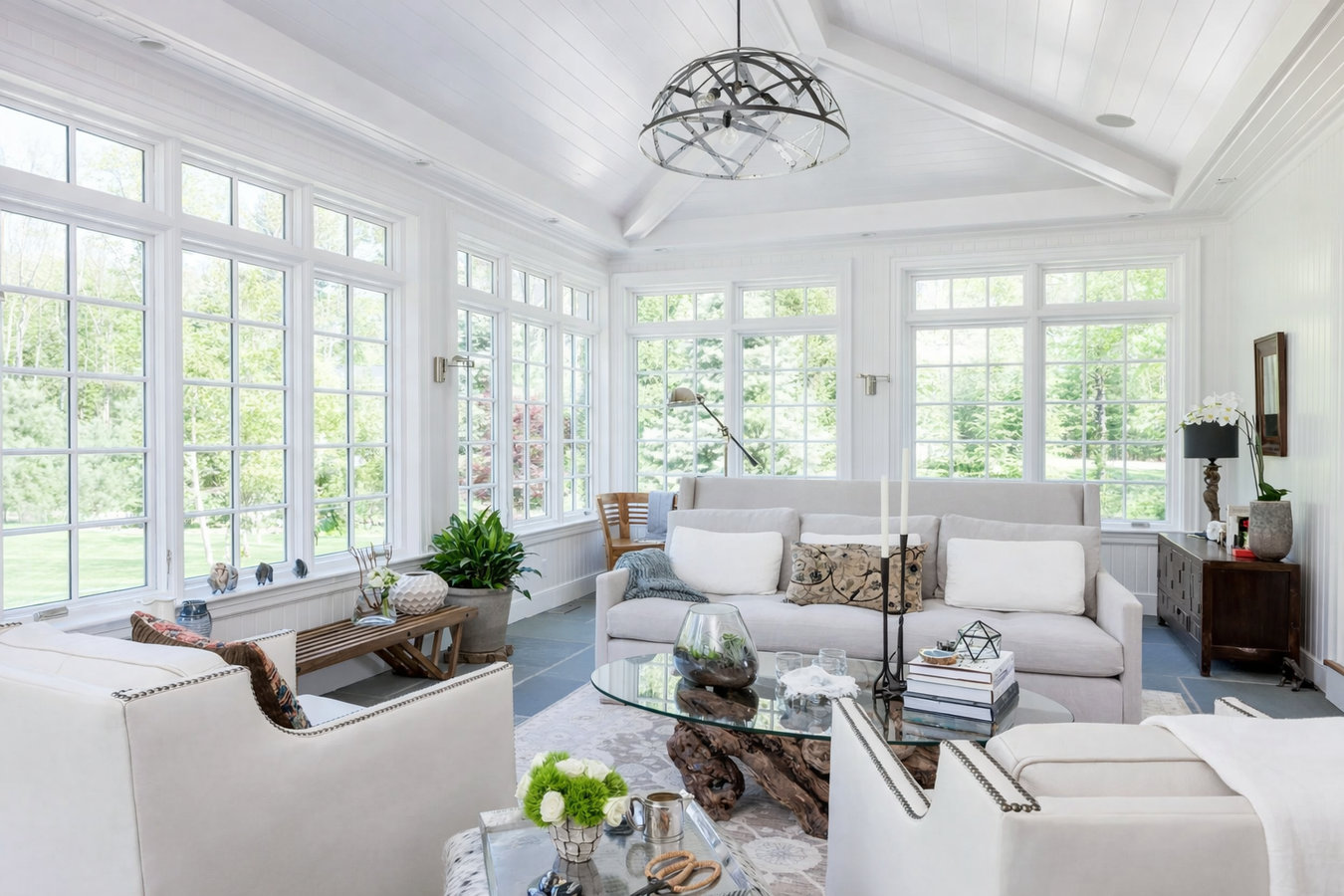
Florida mosquitoes and heat can keep you inside more than you would like. A sunroom addition gives your family a bright, comfortable room connected to the outdoors - without the bugs, the storms, or the summer heat index.
Sunroom additions in Daytona Beach are enclosed room additions attached to your home, built with large windows or glass panels on most walls, and designed to give you natural light and outdoor views without exposure to bugs, rain, or direct sun - most projects run four to twelve weeks from permit approval to final walkthrough.
If you have been spending your evenings indoors because of mosquitoes or heat, or if your screened porch is showing its age, a sunroom addition is the practical next step. Many Daytona Beach homes built in the 1970s through 1990s have small windows and a sliding glass door as the only connection to the backyard - a sunroom changes that. If you are weighing how much living space you actually need, our four season sunrooms page covers the fully insulated option that works year-round.
Florida mosquitoes, no-see-ums, and the afternoon heat index make your patio unusable for months at a time. A sunroom gives you the light and the view without any of that working against you. In Daytona Beach's climate, that difference is felt almost every day of the year.
If the screens are torn, the frame is corroding, or the floor has soft spots, you are already past the point where repairs make sense. Upgrading to a fully enclosed sunroom often costs less in the long run than patching a structure that will need more work in a few years.
Many Daytona Beach homes built in the 1970s and 1980s have small windows and a single sliding door as the only connection to the backyard. A sunroom bridges that gap and makes the whole back of your house feel more open and livable.
If your family has grown or you are working from home and need a quiet room, a sunroom is one of the most cost-effective ways to add square footage. Storm season furniture loss is another push - a sunroom means your outdoor setup stays dry and usable no matter what rolls in off the Atlantic.
Every sunroom addition we build in Daytona Beach starts with a site visit and an honest conversation about how you plan to use the space. The most popular choice for homeowners here is the four season sunroom, which is fully insulated, connected to your home's heating and cooling, and comfortable in any Florida weather. We also handle all the permitting, foundation work, and structural connections that the Florida Building Code requires for permanent additions.
If your project is more complex - attaching a room to an older concrete block home, working around a slab that needs assessment, or building on sandy coastal soil - we handle that from day one. Our sunroom construction team manages the entire build process, so you are not coordinating multiple subcontractors while trying to keep your family's schedule running.
A more affordable option that works well in Daytona Beach's cooler months - ideal for homeowners who want the light and views without the cost of a full HVAC connection.
Fully insulated and climate-controlled, this is the choice for homeowners who want to use the room every day of the year, including Daytona Beach's hottest and most humid months.
If your concrete patio is structurally sound, we can often build on top of it rather than pouring a new foundation - reducing both cost and construction time.
For homeowners who want something specific - a particular size, a certain roofline, or materials chosen for coastal conditions - we work through the design from scratch.
Daytona Beach sits in a coastal wind zone where Florida's building code requires impact-resistant glass and specific wind-load framing for any new structure attached to your home. That means a sunroom addition here costs more than a comparable project in an inland state - but it also means the room is built to hold up when a serious storm rolls through. The sandy soil that is common throughout this area also affects foundation work: a contractor who does not assess your specific yard before quoting is guessing at what it will take. We cover soil conditions upfront, so the number you see in your proposal is the number you pay. Homeowners in communities like Pelican Bay and LPGA International also need HOA approval before construction begins - we can help you understand what to submit, even though that approval is ultimately yours to obtain.
We serve homeowners across the Daytona Beach area, including Port Orange and Ormond Beach. Whether your home is near the Boardwalk or a few miles inland, the permitting process, the soil conditions, and the storm requirements are factors we plan for on every project - not surprises we pass on to you mid-build. For an authoritative reference on Florida's construction standards, the Florida Building Commission publishes the residential code requirements that govern all room additions in the state.
We respond within one business day. We will ask you a few basic questions - what you are hoping to use the room for, roughly how large you are thinking, and whether you have an HOA. No pressure, no pitch.
We come to your home, walk the space with you, and assess your existing foundation, exterior wall, and soil conditions. This visit is the only way to give you a price you can actually count on - we never quote over the phone.
Once you approve the design and sign a contract, we submit the permit application to the City of Daytona Beach or Volusia County. Permit review typically takes two to six weeks - we manage that process so you do not have to.
Construction begins with foundation and framing, then windows, roof, and finishing work. A city inspector signs off at the end. We walk you through the finished room and hand you all permit records - keep those with your home files.
We visit your home, assess your yard and soil conditions, and give you a written estimate you can actually plan around. No phone quotes, no vague ballparks.
(386) 278-1623We submit your permit to the City of Daytona Beach or Volusia County as a standard part of every project - never optional. That permit record protects your home's value, satisfies your homeowner's insurance, and shows up correctly when you sell. A contractor who suggests skipping permits is a contractor worth avoiding.
Daytona Beach is in a coastal wind zone. Every sunroom we build uses glass and framing that meets Florida's impact-resistance requirements. That is not a premium upgrade - it is the baseline for any legitimate addition in this area, and we design to it on every job.
Sandy coastal soil does not provide the same stable base as denser soil types. We assess your yard's conditions before writing your proposal, so the foundation approach and the price you see are based on your actual lot - not a generic estimate that changes once digging starts.
You can verify our Florida contractor license on the Department of Business and Professional Regulation's website before you sign anything. Licensing means we are legally accountable for the work we do on your home. For guidance on what to look for, the National Association of Home Builders publishes consumer resources on hiring licensed contractors.
These are not promises made from a brochure. They are the specific things that keep a Daytona Beach sunroom addition from becoming a source of regret - and they are the things we focus on from the first site visit to the day we hand you the permit records.
A fully insulated, climate-controlled room addition you can use every month of the year - the most comfortable option for Daytona Beach's long, hot summers.
Learn MoreFull-scope construction management for complex builds - older concrete block homes, tricky foundations, and projects that need a single point of contact from permit to final walkthrough.
Learn MorePermit slots fill up quickly in Volusia County. Locking in your start date now means your room is ready before the next storm season - call us or send a message today.